Last updated June 2026
Why Are They There?
The situation in Ithaca is complicated, and Homer is careful to show that it is not as simple as "bad men show up and take over a house." The suitors have a semi-legitimate claim to be there, and understanding that claim is essential to understanding the poem.
Odysseus has been gone for twenty years. Ten at Troy, ten on the journey home. At some point, the people of Ithaca and the surrounding islands decided he was probably dead. In ancient Greek society, a presumed-dead king left a power vacuum. His wife, especially a beautiful and politically significant one like Penelope, would be expected to remarry. The man she married would become the new ruler of Ithaca. That is a significant prize, and it attracted suitors from across the region.
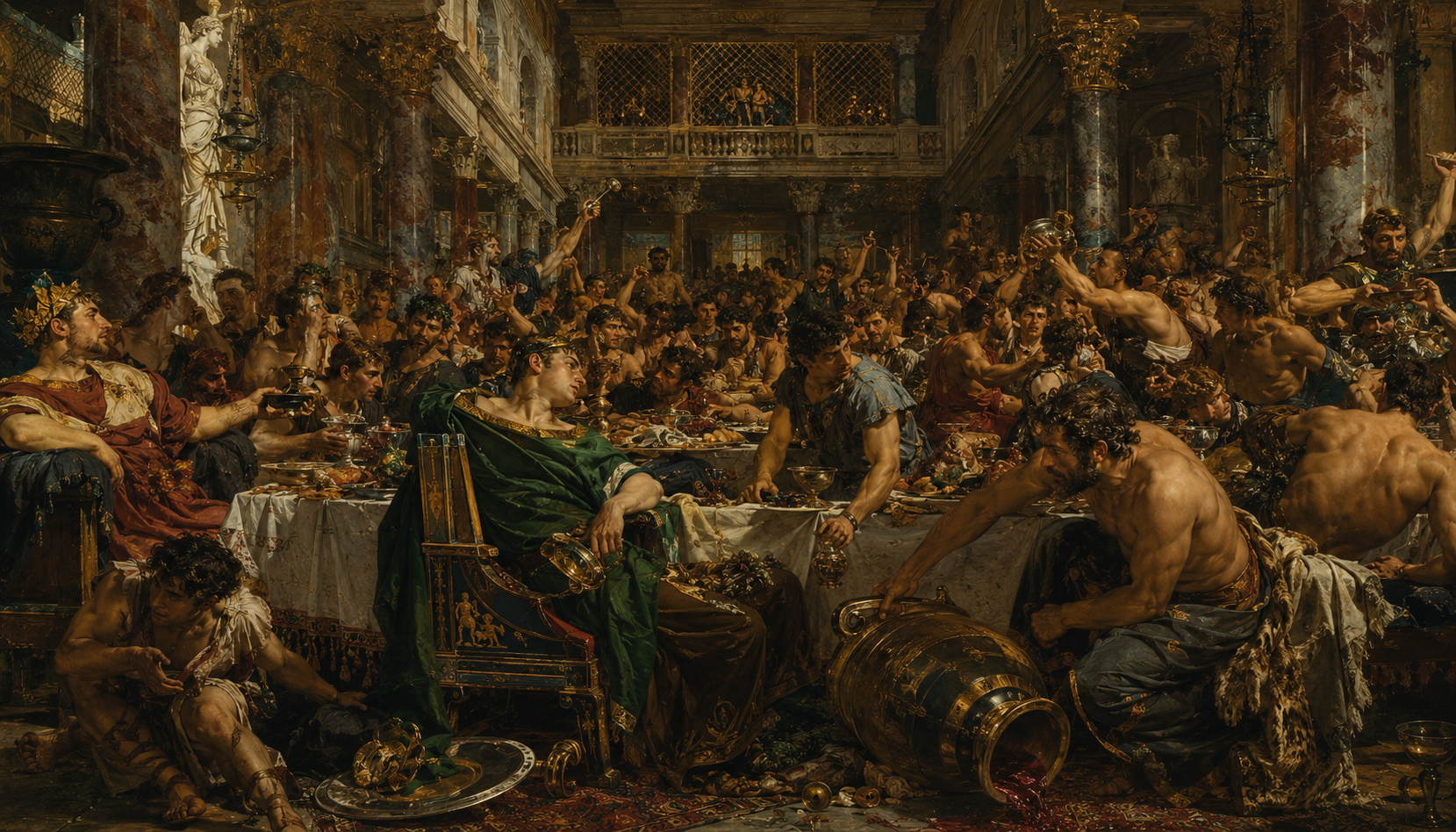
In theory, there was nothing wrong with courting a widowed queen. The problem is how the suitors go about it. Instead of coming to the palace, making their case, and leaving, they move in. They set up camp in Odysseus's great hall and refuse to leave until Penelope chooses. Every day, they slaughter Odysseus's cattle for feasts. They drink his wine stores. They take his servants to bed. They treat the palace as their personal dining hall, and the longer Penelope delays her decision, the more they consume.
This is a violation of xenia, the sacred Greek custom of guest-host relations. Guests are supposed to be welcomed, fed, and given gifts. But guests are also supposed to be respectful, to not overstay their welcome, and to not destroy their host's property. The suitors have weaponized hospitality. They claim the rights of guests while fulfilling none of the obligations. It is a perversion of one of Greek culture's most important values, and the poem treats it as a crime that deserves the harshest punishment.
Antinous: The Ringleader
Antinous is the most prominent suitor and the most hateful. He is the son of Eupeithes, a local nobleman, and he behaves as though the palace already belongs to him. He is loud, violent, contemptuous, and he takes the lead in every act of cruelty the suitors commit.
When Telemachus calls an assembly to publicly confront the suitors, Antinous responds by blaming Penelope for leading them on with the weaving trick. When Telemachus sails to Pylos and Sparta seeking news of his father, Antinous organizes the plot to ambush and murder him on his way home. When Odysseus enters the palace disguised as a beggar, Antinous is the first to insult him and the first to throw something at him, hitting him with a footstool.
Homer makes Antinous the face of the suitors' worst qualities: arrogance, cruelty, entitlement. He does not feel guilty about what he is doing. He does not question whether he has the right to consume another man's wealth and plot to kill his son. He simply takes what he wants because no one can stop him. That is what makes his death so satisfying. When Odysseus finally reveals himself in Book 22, Antinous is the first to die. The arrow hits him in the throat while he is lifting a cup of wine to his lips. He does not even see it coming. The man who spent the poem drinking Odysseus's wine dies with the last cup still in his hand.
Eurymachus: The Smooth Talker
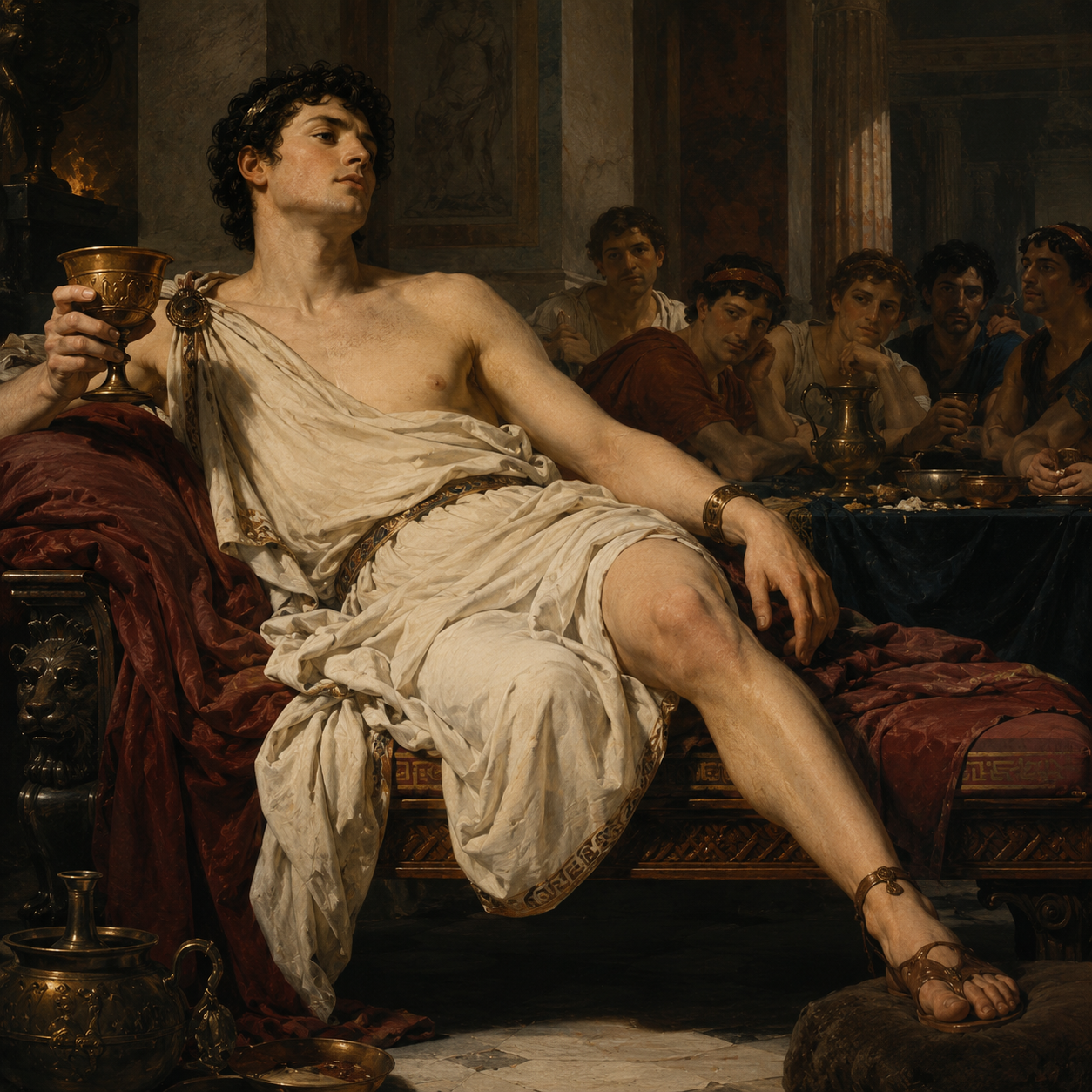
If Antinous is the suitors' muscle, Eurymachus is their politician. He is described as the most popular of the suitors, the one who says the right things, flatters the right people, and manages public perception. He is probably the most dangerous of all of them, because he is smart enough to hide his intentions behind charm.
Eurymachus tells Penelope what she wants to hear. He tells the people of Ithaca what they want to hear. He insults Telemachus at the assembly, but does it in a way that sounds reasonable rather than thuggish. He is the kind of person who stabs you in the back while shaking your hand.
Homer reveals his true character in small moments. When a prophet named Halitherses interprets an omen as a warning that Odysseus will return and punish the suitors, Eurymachus publicly mocks the old man and threatens to fine him. When Odysseus, in disguise, tells a story about his travels, Eurymachus throws a footstool at him. The mask of civility slips whenever Eurymachus feels challenged.
When the killing starts, Eurymachus tries to negotiate. He tells Odysseus that Antinous was the real problem, that Antinous was behind everything, and that now that Antinous is dead, the rest of them should be allowed to leave and pay restitution. It is a remarkable speech: the smooth talker trying to talk his way out of death. Odysseus does not buy it. Eurymachus draws his sword and charges, and Odysseus puts an arrow in his chest.
Recommended Reading
As an Amazon Associate, we earn from qualifying purchases.
Amphinomus: The Decent One
Amphinomus is the most interesting suitor precisely because he is the most sympathetic. He is from the island of Dulichium, and Homer describes him as the suitor Penelope liked best because of his good sense. He is polite. He is respectful. When the other suitors abuse the disguised Odysseus, Amphinomus offers him food and drink.
Homer gives Odysseus a remarkable scene with Amphinomus in Book 18. Odysseus, still in disguise, sits down with Amphinomus and essentially tries to warn him. He tells a story about how fortune can change, how a man who thinks he is safe can be destroyed in a moment. He says, in so many words: leave this house. Something bad is coming. You do not want to be here when the master returns.
"You seem like a man of sense to me. Listen to what I have to say. There is nothing feebler than a man. The earth feeds nothing more wretched. He thinks he will never suffer misfortune while the gods give him power and his knees are strong. But when the blessed gods bring trouble, he bears it against his will with endurance." Homer, The Odyssey, Book 18
Amphinomus listens. He is troubled. Homer says he walks away with a heavy heart, sensing doom. But he does not leave. He stays in the hall. And in Book 22, Telemachus kills him with a spear through the back.
Amphinomus matters because he complicates the poem's morality. He is not a villain. He is a decent man who made a bad decision and could not bring himself to walk away from it. His death is not triumphant. It is tragic. And Homer wants you to feel the difference between killing Antinous (which feels like justice) and killing Amphinomus (which feels like waste). The poem does not flinch from the ugliness of the slaughter, and Amphinomus is a big part of why.
The Murder Plot Against Telemachus
The suitors' decision to murder Telemachus is the act that removes any remaining sympathy the audience might have for them. Eating someone's food is one thing. Killing their son is another.
The plot takes shape when Telemachus sails to Pylos and Sparta. The suitors are alarmed. They did not expect the quiet boy to take action. If Telemachus is gathering allies, building a coalition, or returning with soldiers, the suitors' position is threatened. Antinous proposes stationing a ship in the strait between Ithaca and the mainland to intercept Telemachus on his way home and kill him at sea.
The suitors agree. They actually put a ship in the water and man it with armed men. This is not an idle threat or drunken talk. They commit resources, manpower, and planning to the assassination of a prince. They only fail because Athena warns Telemachus to come home by a different route.
When the ambush fails, they consider trying again. Antinous wants to. Amphinomus persuades them to wait for a sign from Zeus first. No sign comes, so they drop the plan for the moment. But the intent was there. They tried to kill a young man in cold blood, and they would have succeeded if not for divine intervention. The poem makes sure you remember this when the killing starts.
The Violation of Xenia
The suitors' behavior is not just rude or greedy. In the moral framework of the Odyssey, it is sacrilege. Xenia, the reciprocal relationship between guest and host, is protected by Zeus himself. To violate it is to offend the gods.
The suitors violate xenia in every conceivable way. They consume their host's resources without permission. They refuse to leave when they are clearly not wanted. They abuse other guests (throwing things at the disguised Odysseus). They sleep with the host's servants. They plot to kill the host's son. And when Odysseus finally arrives in his own home, in disguise, they treat him with contempt rather than the courtesy a stranger is owed.
The Cyclops Polyphemus also violated xenia by eating his guests instead of feeding them. The suitors are doing the opposite version of the same crime: they are guests who eat the host. Both the monster and the suitors commit the fundamental sin of the Odyssey's moral universe, and both are punished for it. The comparison is deliberate. Homer is saying that civilization and monstrousness are not as far apart as we think. A Cyclops eats guests because he does not know better. The suitors abuse their host because they do not care.
Recommended Reading
As an Amazon Associate, we earn from qualifying purchases.
The Slaughter: Book 22
When Odysseus strings the bow and shoots through the twelve axe heads, the contest is over and the killing begins. He drops his disguise. He turns the bow on the suitors. And for the entire length of Book 22, the great hall of Ithaca becomes a slaughterhouse.
Antinous dies first, an arrow through the throat. The suitors initially think it is an accident, that the beggar's arrow went astray. Then Odysseus announces who he is, and panic sets in. The suitors are trapped. The doors are locked. The weapons have been removed from the hall (Telemachus and Odysseus took them out earlier). They have nothing to fight with except the furniture and whatever they can improvise.
Eurymachus tries to talk his way out. Odysseus refuses. Eurymachus charges and dies. Then the hall becomes a battle. Some suitors find weapons (Melanthius, a treacherous goatherd, sneaks armor out of the storeroom before Telemachus catches him). But Odysseus, Telemachus, the swineherd Eumaeus, and the cowherd Philoetius are armed and positioned. Athena helps, deflecting spears and rallying Odysseus when he tires.
Every suitor dies. Homer does not sugarcoat this. The floor is slippery with blood. Bodies pile up. Some suitors beg for mercy. They do not receive it, with two exceptions: the bard Phemius, who sang for the suitors under compulsion, and the herald Medon, who had been kind to Telemachus as a child. These two are spared because they can prove they were not willing participants. Everyone else dies.
The aftermath is grim. Odysseus orders the treacherous serving women (who had slept with the suitors willingly) to clean the blood from the hall and then has them hanged in the courtyard. The goatherd Melanthius is mutilated and killed. The palace is fumigated with sulfur. The homecoming is complete. The house is clean. But the cost is enormous.
Did They All Deserve It?
This is the question the poem does not quite answer, and it is the question that has made the suitor slaughter one of the most debated episodes in ancient literature.
Homer clearly presents the suitors as villains. They violate xenia. They try to murder Telemachus. They consume another man's wealth. They disrespect the queen. The poem positions their deaths as justice. Zeus himself sanctions it. Athena assists. The suitors are punished for their crimes, and the moral order is restored.
But Amphinomus. But the fact that some of the suitors are barely more than boys, young men following the lead of older ones. But the scale of it: over a hundred men killed in a single afternoon. Homer does not ignore these complications. He includes them. He makes you see the blood on the floor. He makes you hear the begging. He gives you Amphinomus walking away with a heavy heart and then dying with a spear in his back anyway.
The Odyssey is not a simple morality tale where good kills evil and everyone feels fine about it. It is a poem about the terrible cost of setting things right. Odysseus gets his home back. But the last image of his great hall is a room full of corpses, and the last book of the poem is about the families of the dead coming for revenge. Justice is done. But justice, Homer seems to say, is a bloody business.
Hear the Suitors Meet Their End
Our full-cast narration gives every suitor a voice: Antinous's arrogance, Eurymachus's smooth bargaining, Amphinomus's uneasy conscience. Follow them from their first appearance in Book 1 through the bow contest in Book 21 to the slaughter in Book 22. Every word highlighted as it is spoken. You will understand why the poem spends so long making you despise them before it lets Odysseus pick up the bow.
Explore the Odyssey
As an Amazon Associate, we earn from qualifying purchases.
Related Pages
Hear the Suitors Fall
Full-cast narration. Every word highlighted as it is spoken. Start with Book 22 and hear Odysseus reclaim his hall.
Open Book 22The Reckoning
Test of the Bow and Odysseus merch. T-shirts, posters, mugs, canvas prints, and tote bags.
Browse All ProductsFEATURED DESIGNS
MORE ODYSSEY DESIGNS
Hear this character's story in Homer's own words
Go Deeper Into the Odyssey Film
Get the free Odyssey Companion Guide: character map, timeline, family tree, and the essential scenes from Homer's poem and the film.
No spam. Unsubscribe anytime.