How the Gods Work in Homer's World
Before we get into the individual gods, it helps to understand how divine intervention works in the Odyssey. The gods are not distant, abstract forces. They walk among mortals in disguise. They take sides. They argue with each other on Olympus and then fly down to interfere directly in human affairs. They have favorites and grudges, egos and agendas.
But they are not all-powerful in the way a monotheistic god might be. They can be overruled by other gods. They can be outvoted in council. They have to respect certain boundaries, particularly the decrees of Fate, which even Zeus cannot override. The Odyssey shows us a universe where human free will and divine intervention coexist in a complicated dance. Mortals make choices, but gods tip the scales. Odysseus is fated to return home, but Poseidon can make the journey take ten years. Athena can guide Telemachus, but the young man still has to find his own courage.
The poem opens on Olympus, with the gods debating Odysseus's case as though it were a court hearing. That is not an accident. The divine council frames everything that follows. The human story is, in a very real sense, the gods' story too.
Athena: Protector, Strategist, Partner
Athena is the most important god in the Odyssey. She is the goddess of wisdom, strategic warfare, and crafts, and she is Odysseus's devoted champion from the first line to the last. It is Athena who raises the matter of Odysseus's suffering on Olympus in Book 1, taking advantage of Poseidon's absence to win Zeus's permission for Odysseus to go home. It is Athena who flies to Ithaca to light a fire under Telemachus, disguised as the old family friend Mentes. And it is Athena who stands beside Odysseus in the final battle against the suitors, deflecting spears and turning the tide.
What makes the Athena-Odysseus relationship special is that it is not a typical god-mortal hierarchy. When Athena reveals herself to Odysseus on the shores of Ithaca in Book 13, the conversation reads almost like two old friends catching up. She teases him for lying to her (he spun a false story without realizing who she was). He complains that she abandoned him during his wanderings. She tells him they are kindred spirits:
She admires him because he is clever, not because he is strong. Athena has no interest in brute force. She likes the plan, the trick, the well-timed disguise. Odysseus is her kind of mortal, and she treats him accordingly, with respect, with humor, and with a collaborative style that is rare in Homer. She does not simply rescue him. She helps him help himself. She disguises him as a beggar but lets him choose how to approach the suitors. She gives Telemachus confidence but does not fight his battles for him. She is the ultimate strategist, and her strategy is always the same: set the conditions, then let the humans execute.
In the poem's final scene, it is Athena who imposes peace between Odysseus and the families of the slain suitors. She steps between the two sides, on Zeus's orders, and demands that the fighting stop. The Odyssey does not end with a human solution. It ends with a divine one. Athena has the last word, just as she had the first.
Poseidon: The Grudge That Drives the Plot
If Athena is Odysseus's greatest ally, Poseidon is his greatest enemy. And the grudge is personal: Odysseus blinded Poseidon's son, the Cyclops Polyphemus, and then shouted his own name as he sailed away. Polyphemus prayed to his father for vengeance, and Poseidon obliged. From that moment on, the god of the sea dedicates himself to making Odysseus's voyage home as miserable as possible.
Poseidon cannot kill Odysseus. Fate has decreed that Odysseus will reach Ithaca. But Poseidon can delay, torment, and shipwreck him. He smashes Odysseus's raft in Book 5, nearly drowning him within sight of the Phaeacian shore. He stirs up storms that drive the fleet off course. He is the reason a journey that should have taken weeks takes ten years.
What makes Poseidon interesting is that he is not evil. By his own standards, he is justified. Odysseus maimed his son. In a culture built on honor and blood ties, a father has every right to seek revenge. Poseidon is not arbitrary. He is consistent. He told Zeus at the beginning that he would not let the offense go unpunished, and he follows through. The poem does not ask us to hate Poseidon. It asks us to understand that Odysseus's suffering is the consequence of his own actions in the Cyclops's cave.
Notably, the poem begins on a day when Poseidon is away, feasting with the Ethiopians. Athena seizes the opportunity to push Odysseus's case with Zeus. The entire plot depends on Poseidon being absent at the right moment. When he returns and discovers what has happened, he is furious, but by then Odysseus is already in motion. Poseidon's rage provides the dramatic tension. Without it, the Odyssey would be a quick, uneventful sail home.
Recommended Reading
As an Amazon Associate, we earn from qualifying purchases.
Zeus: The Arbiter
Zeus, the king of the gods, does not take sides in the Odyssey the way Athena and Poseidon do. Instead, he acts as the ultimate referee. He is the one who grants Athena permission to help Odysseus. He is the one who sends Hermes to tell Calypso to release Odysseus. He is the one who punishes Odysseus's crew for eating the cattle of the sun god Helios by striking their ship with a thunderbolt and killing everyone on board except Odysseus.
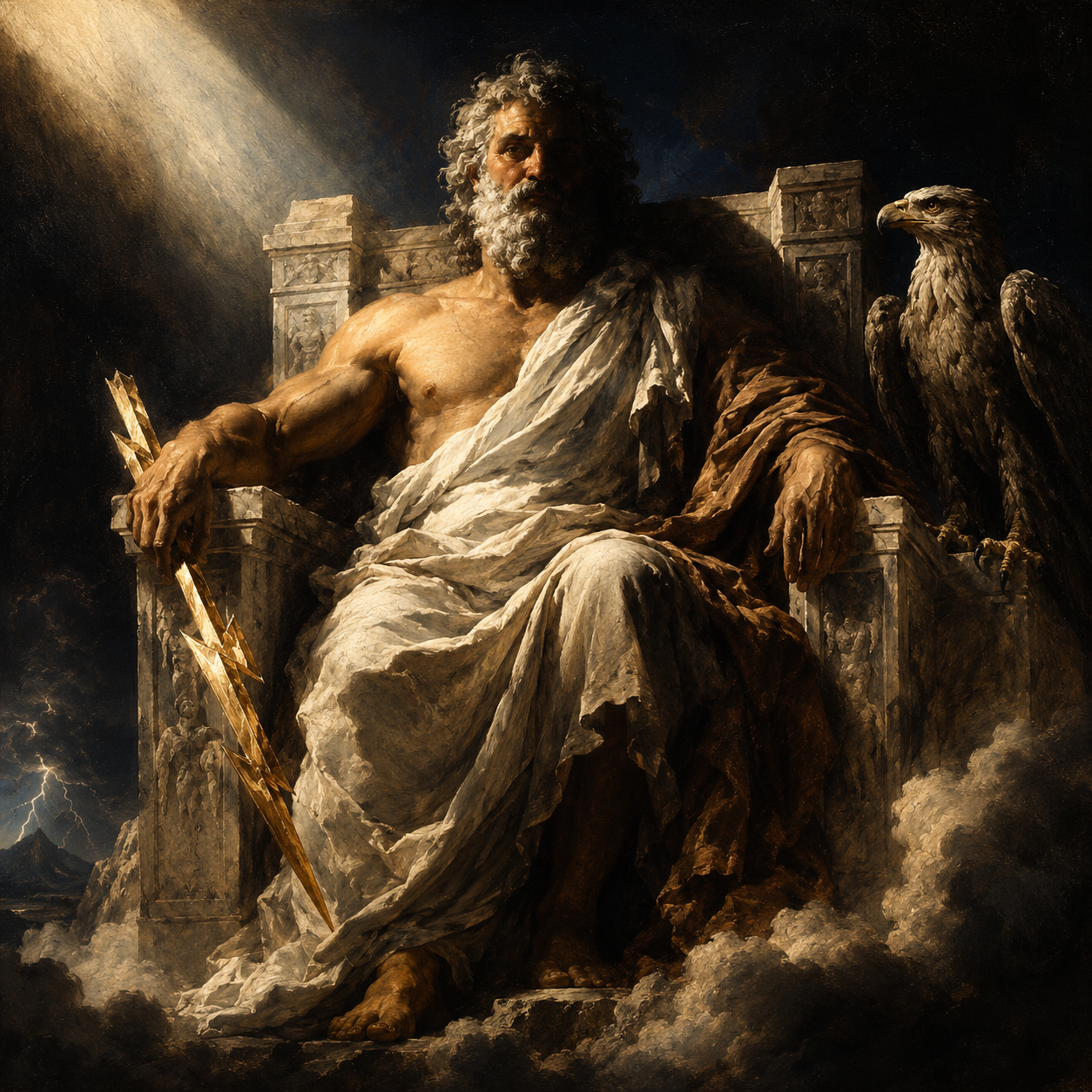
Zeus weighs the fates of mortals from his throne
The poem opens with Zeus making a philosophical observation that sets the tone for everything that follows. He points out that mortals blame the gods for their suffering, when much of it is their own fault. His example is Aegisthus, who was warned not to seduce Clytemnestra or kill Agamemnon, did it anyway, and paid the price. Zeus's point is clear: the gods establish rules and consequences, but humans choose whether to follow them.
This idea runs through the entire Odyssey. The crew eats the sacred cattle despite being warned. They suffer. The suitors abuse the laws of hospitality despite every warning sign. They suffer. Odysseus shouts his name at the Cyclops despite knowing better. He suffers. Zeus does not prevent these choices. He lets them happen and then enforces the consequences. He is less a character than a principle: in this universe, actions have costs, and no one, not even a god's favorite, gets a free pass.
Hermes: The Divine Messenger
Hermes appears twice in the Odyssey, and both times he changes the course of the story. In Book 5, Zeus sends him to Calypso's island to deliver the order: let Odysseus go. Hermes flies across the sea, arrives at Calypso's beautiful cave, and delivers the message with diplomatic skill. He is sympathetic to Calypso but firm. The order comes from Zeus, and there is no appealing it. Without Hermes's visit, Odysseus would spend eternity on Ogygia.
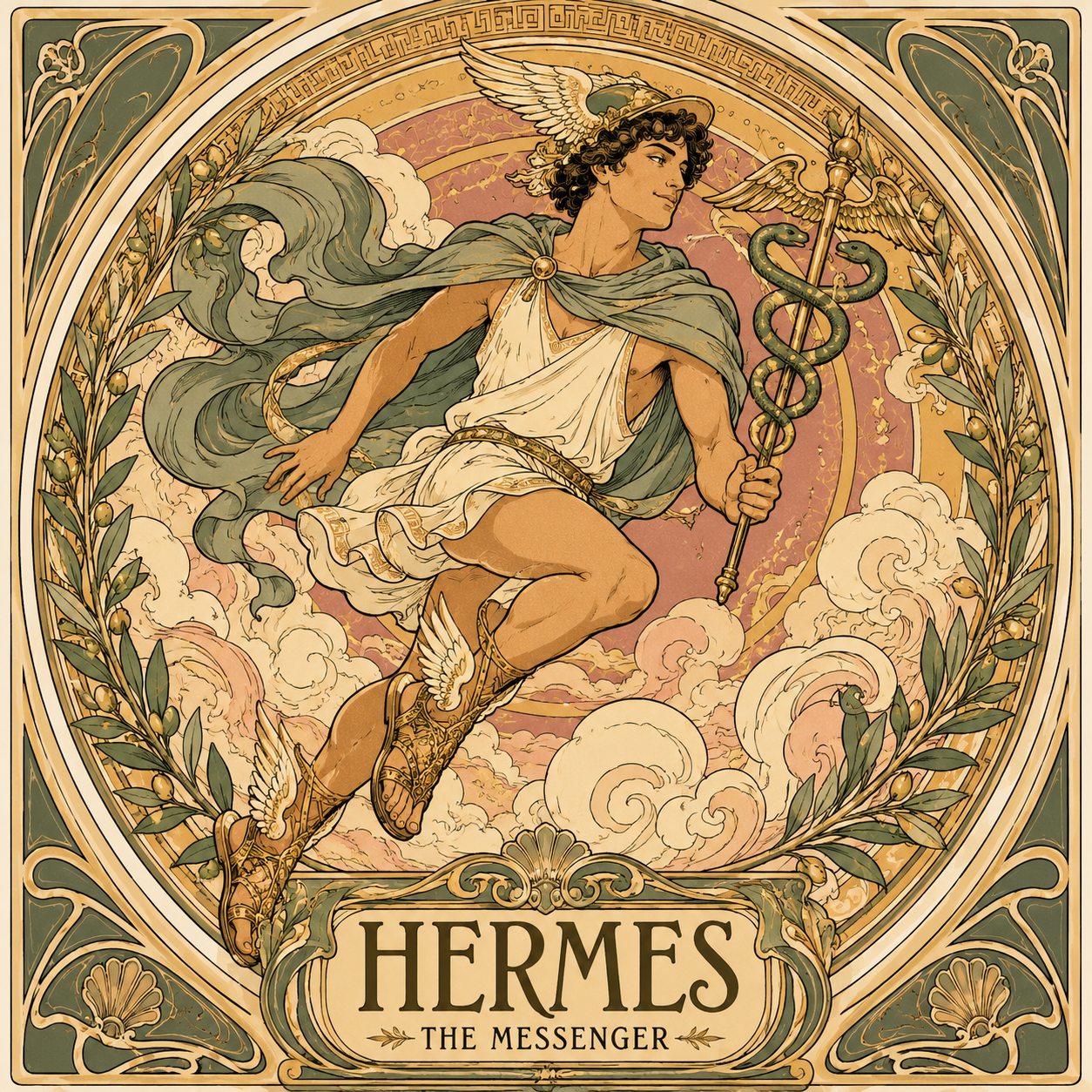
The swift messenger carries the will of Olympus
In Book 10, Hermes appears to Odysseus on Circe's island, warning him that the enchantress will try to turn him into a pig and giving him the magical herb moly to protect himself. He also tells Odysseus exactly what to do: resist Circe's magic, draw his sword, and make her swear not to harm him. Hermes is the gods' problem-solver, the one who shows up at critical moments with exactly the information or tool the hero needs.
In Book 24, Hermes has one final role: he leads the ghosts of the slain suitors down to the underworld, guiding them with his golden wand. It is a solemn, eerie scene. The god of travelers guides the dead on their last journey, and the poem reminds us that even the suitors, for all their crimes, had souls that needed escorting to the afterlife.
Calypso: The Goddess Who Loved Him
Calypso is a nymph or minor goddess who lives alone on the island of Ogygia, far from the other gods and from the human world. When Odysseus washes up on her shore after losing his entire crew, she takes him in, falls in love with him, and keeps him for seven years. She offers him immortality. She offers him eternal youth. She offers him herself. And Odysseus, who sleeps with her every night, spends every day sitting on the rocks and staring out at the sea, weeping for home.
Calypso is a complicated figure. She genuinely loves Odysseus. She is also holding him prisoner. When Hermes arrives with Zeus's order to let him go, she protests bitterly. She accuses the male gods of hypocrisy: they are allowed to take mortal lovers, but when a goddess does the same, they intervene. Her complaint has a point. The divine double standard is real. But her argument does not change the fact that Odysseus does not want to stay.
The Calypso episode raises one of the poem's most interesting questions: is paradise a prison if you did not choose it? Odysseus has everything on Ogygia, eternal life, a beautiful goddess, a perfect island, but it is not his. He would rather grow old and die in Ithaca with Penelope than live forever with Calypso. That choice defines him as a character. He is the man who chooses mortality, imperfection, and home.
Recommended Reading
As an Amazon Associate, we earn from qualifying purchases.
Circe: The Enchantress of Aeaea
Circe is a goddess (Homer calls her a "great goddess" and a daughter of Helios, the sun) who lives on the island of Aeaea. When Odysseus's advance party arrives at her palace, she invites them in, feeds them a drugged meal, and turns them into pigs with a touch of her wand. Only Eurylochus, who waited outside, escapes to warn Odysseus.
With Hermes's help, Odysseus resists Circe's magic. He threatens her with his sword, and she, surprised and impressed, agrees to return his men to human form. What follows is unexpected: Odysseus and his crew stay on Aeaea for an entire year. Circe feeds them, advises them, and becomes Odysseus's lover. Unlike Calypso, Circe does not try to keep Odysseus forever. When it is time for him to leave, she helps him prepare. She tells him he must visit the land of the dead to consult the prophet Teiresias. She gives him detailed instructions for navigating the Sirens, Scylla, and Charybdis.
Circe's role shifts from adversary to advisor over the course of the episode. She tests Odysseus, finds him worthy, and then becomes one of his most valuable sources of intelligence. Without her warnings, he would have no idea what awaits him. She is dangerous, powerful, and ultimately helpful, a pattern that repeats throughout the poem. In the Odyssey, the most useful allies are often the ones who almost destroyed you first.
Helios: The Sun God Whose Cattle Change Everything
Helios, the sun god, does not appear as a character in the way Athena or Poseidon do, but his cattle are the hinge on which the entire second half of the poem turns. On the island of Thrinacia, Helios keeps sacred herds of cattle and flocks of sheep. Teiresias and Circe both warn Odysseus: do not touch them. If you eat the cattle, you and your crew will die.
Odysseus tries. He makes his men swear an oath not to kill any animal on the island. But they are trapped there for a month by bad winds, their supplies run out, and when Odysseus falls asleep, the starving crew slaughters the best of the cattle. Helios is furious. He demands that Zeus punish them, and threatens to take his light down to the underworld if justice is not done. Zeus strikes the ship with a thunderbolt as soon as they leave port. Everyone drowns except Odysseus, who clings to the wreckage and drifts for nine days before washing up on Calypso's island.
The cattle of the sun episode is about the consequences of disobedience, and about the limits of leadership. Odysseus warned his men. He made them swear. He did everything right except stay awake. And their one moment of desperation cost all of them their lives. It is the cruelest lesson in the poem, and it is enforced by the gods without mercy.
The Gods as a System
What makes the divine machinery of the Odyssey so effective is that the gods do not all want the same thing. Athena wants Odysseus home. Poseidon wants him lost at sea. Zeus wants cosmic order maintained. Calypso wants love. Circe wants someone who can match her. Helios wants justice for his cattle. These competing agendas create a kind of divine weather system, unpredictable, powerful, and indifferent to any individual human's convenience.
The mortals in the poem navigate this system as best they can. They pray. They sacrifice. They try to read the signs. But they also make their own choices, and the poem is very clear that those choices matter. The gods set the playing field, but humans play the game. Odysseus is fated to return, but the quality of that return, the suffering involved, the relationships preserved or destroyed, depends on what he and the people around him choose to do within the boundaries the gods allow.
That balance between human agency and divine power is one of the reasons the Odyssey has lasted three thousand years. It takes the idea of gods seriously without reducing human beings to puppets. Everyone in the poem, mortal and immortal alike, is accountable for their actions. And that, in the end, is what makes the story feel real.
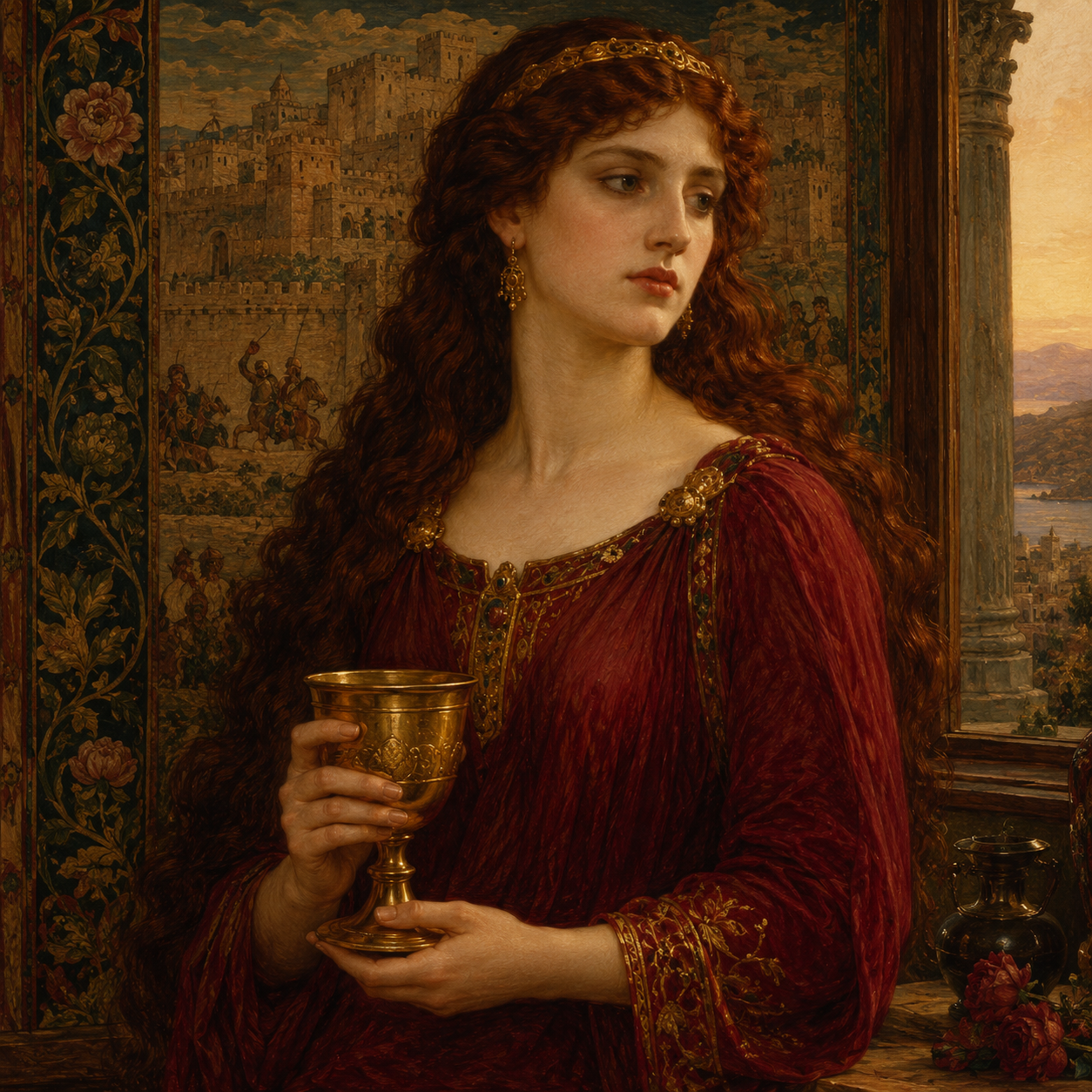
Helen, whose fate set the Trojan War in motion
Explore the Gods
As an Amazon Associate, we earn from qualifying purchases.
Related Pages
Hear the Gods Speak
In our full-cast audiobook, every god has their own voice. Athena, Zeus, Poseidon, Hermes, Calypso, and Circe all speak in distinct voices, bringing the divine drama to life. Every word highlighted as it is spoken.
Open the ReaderOdyssey Collection
All 15 Olympian gods on premium t-shirts, plus the full Odyssey Collection: posters, mugs, canvas prints, and tote bags.
Shop This DesignHear this character's story in Homer's own words
Go Deeper Into the Odyssey Film
Get the free Odyssey Companion Guide: character map, timeline, family tree, and the essential scenes from Homer's poem and the film.
No spam. Unsubscribe anytime.