Last updated June 2026
Main Characters
The six figures at the heart of the story: the hero, his family, and the gods pulling the strings.
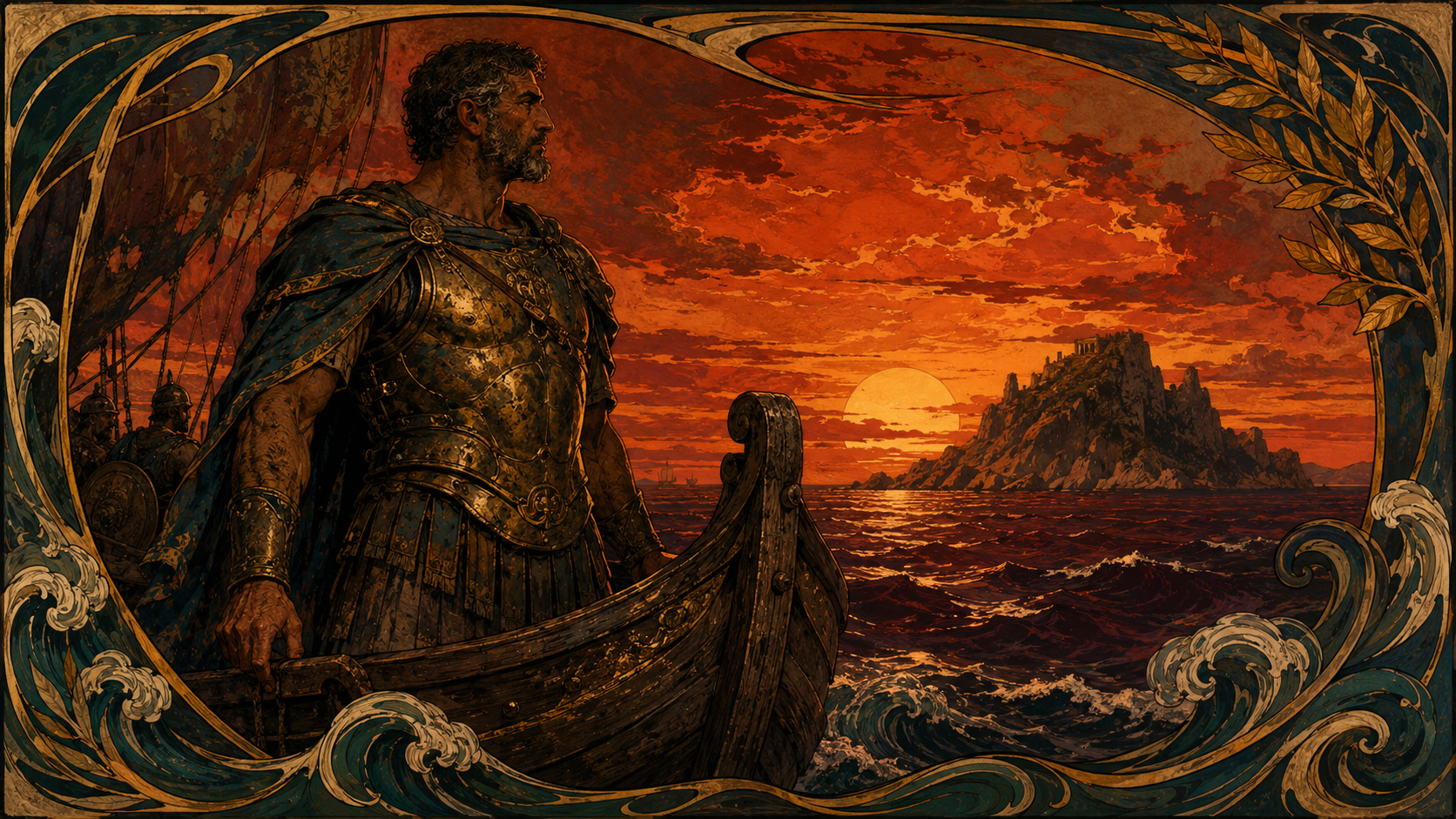
Odysseus
King of Ithaca · The Hero
The king of Ithaca, trying to get home from Troy for ten years straight. Homer calls him "the man
of many turns," and that fits: he talks his way past monsters, outwits gods, and tells his own story
so well that four entire books are just him narrating. He is a devoted husband, a ruthless fighter,
and above all a thinker. His mind is his best weapon, not his bow.
Appears in: Books 2, 5, 6, 7, 8, 9, 10, 11, 12, 13, 14, 15, 16, 17, 18, 19, 20, 21, 22, 23, 24
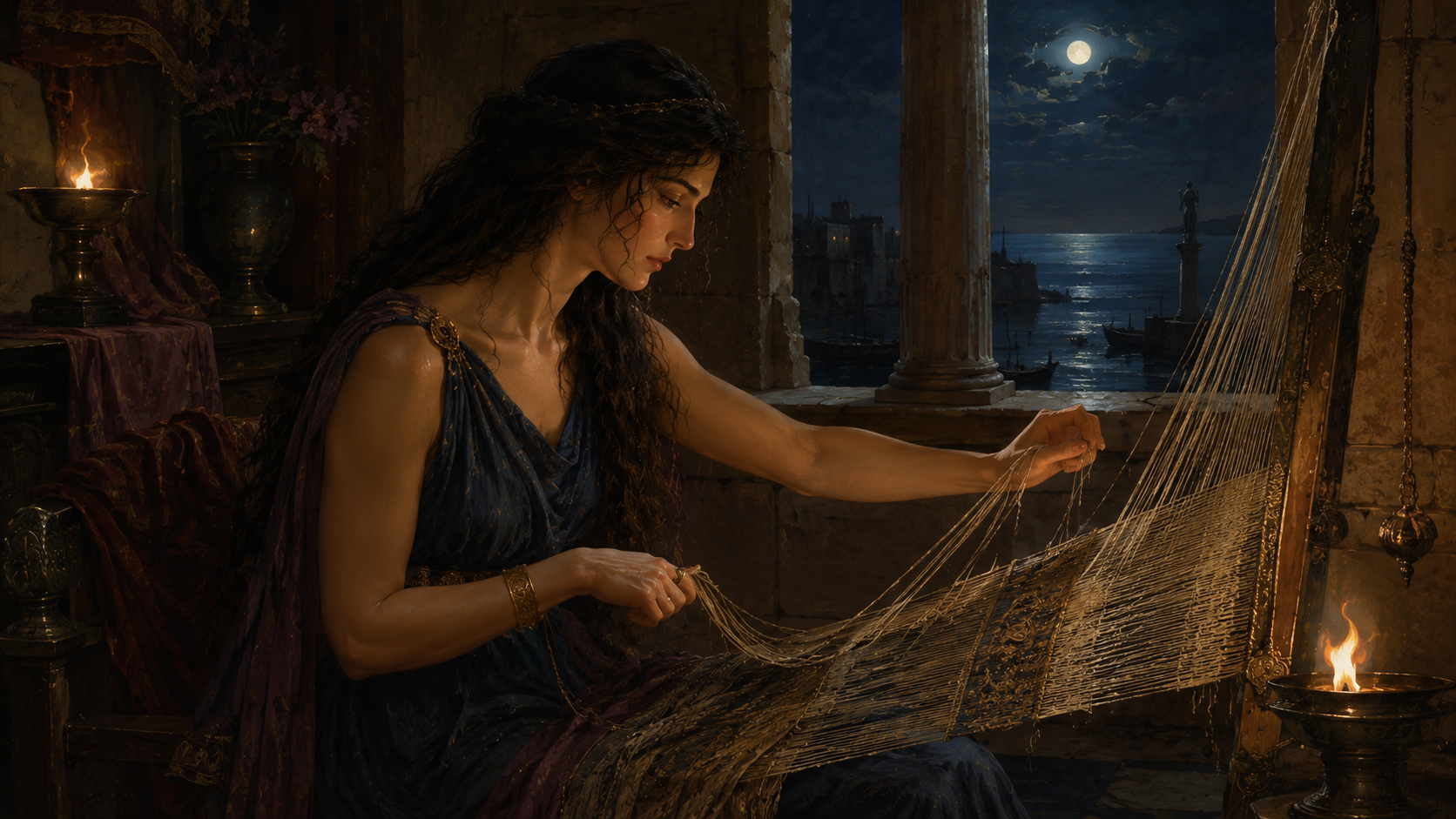
Penelope
Queen of Ithaca · The Faithful Wife
Odysseus's wife, holding the household together for twenty years while over a hundred suitors
eat through the family's wealth and pressure her to remarry. She is every bit as clever as her husband.
Her trick of weaving a shroud by day and unraveling it at night buys her years of delay. Even when
Odysseus finally returns, she tests him with a secret about their bed before she believes it is really him.
Appears in: Books 1, 4, 16, 17, 18, 19, 20, 21, 23
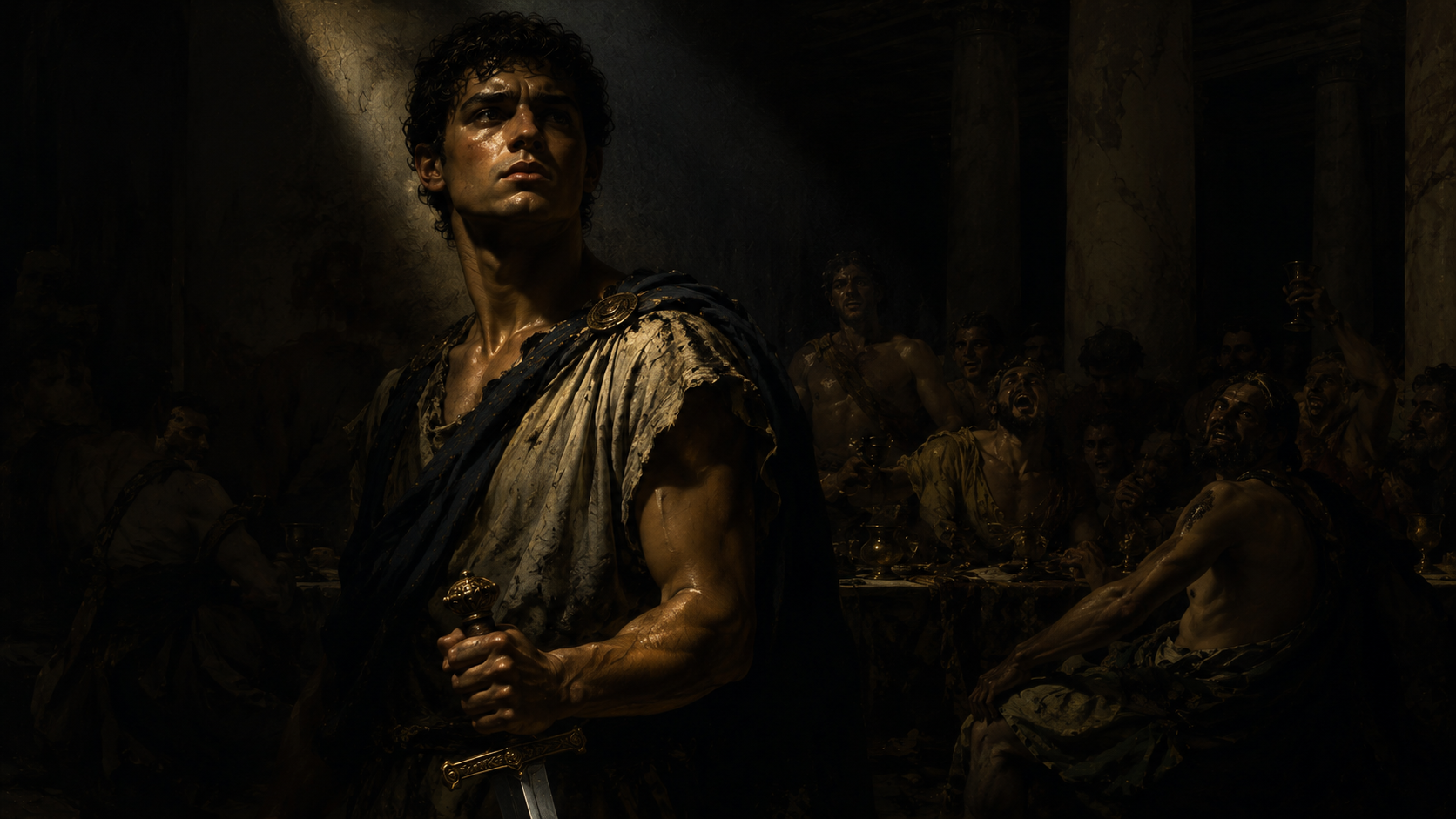
Telemachus
Prince of Ithaca · The Son
Odysseus and Penelope's son, just a baby when his father left for Troy. The first four books
(sometimes called the "Telemachy") follow him growing up fast, traveling to Pylos and Sparta
to ask after his missing father. By the end of the poem he fights alongside Odysseus against
the suitors, a young man who has finally stepped into his own.
Appears in: Books 1, 2, 3, 4, 15, 16, 17, 18, 19, 20, 21, 22, 23, 24
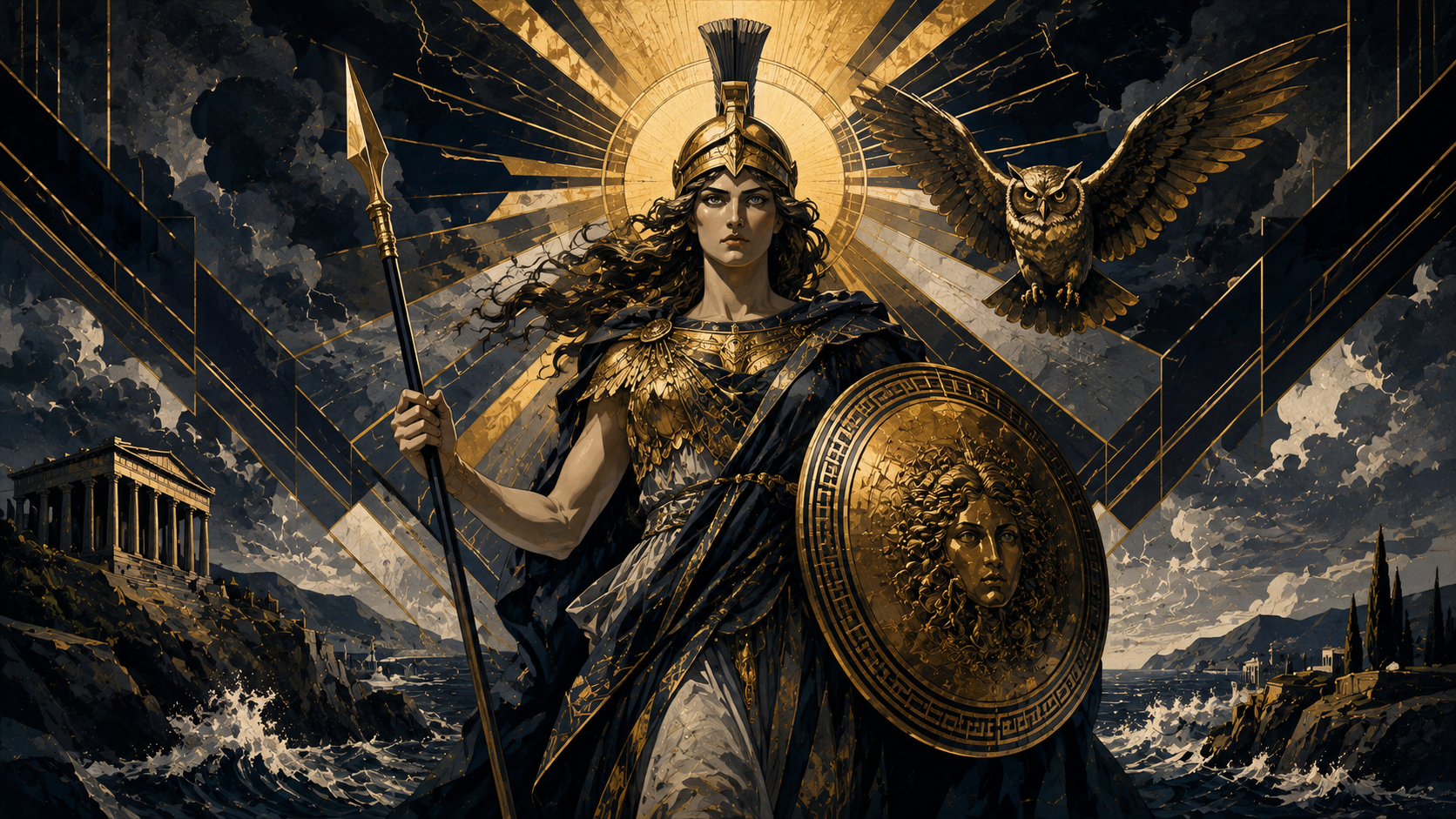
Athena
Own an Athena bust for your desk →
Goddess of Wisdom · Divine Patron
The grey-eyed goddess and Odysseus's biggest supporter on Olympus. She appears in more books than
anyone else: persuading Zeus to let Odysseus go, sending Telemachus on his journey, disguising
Odysseus as a beggar, and fighting beside him at the end. She and Odysseus genuinely like each other
because they think the same way, all strategy and cleverness. It is one of the best god-and-mortal
relationships in Greek literature.
Appears in: Books 1, 2, 3, 4, 5, 6, 7, 8, 13, 15, 16, 20, 22, 24
Zeus
King of the Gods · Ruler of Olympus
The boss. Zeus does not meddle often, but when he does, it sticks. He is the one who finally
green-lights Odysseus's return over Poseidon's objections. He opens the poem by musing on how
humans bring trouble on themselves, which sets the tone for everything that follows. When the
crew eats the Sun god's cattle, Zeus sinks the ship. When the poem needs to end, he throws the
last thunderbolt and calls for peace.
Appears in: Books 1, 3, 9, 12, 13, 24
Poseidon
God of the Sea · The Antagonist Divine
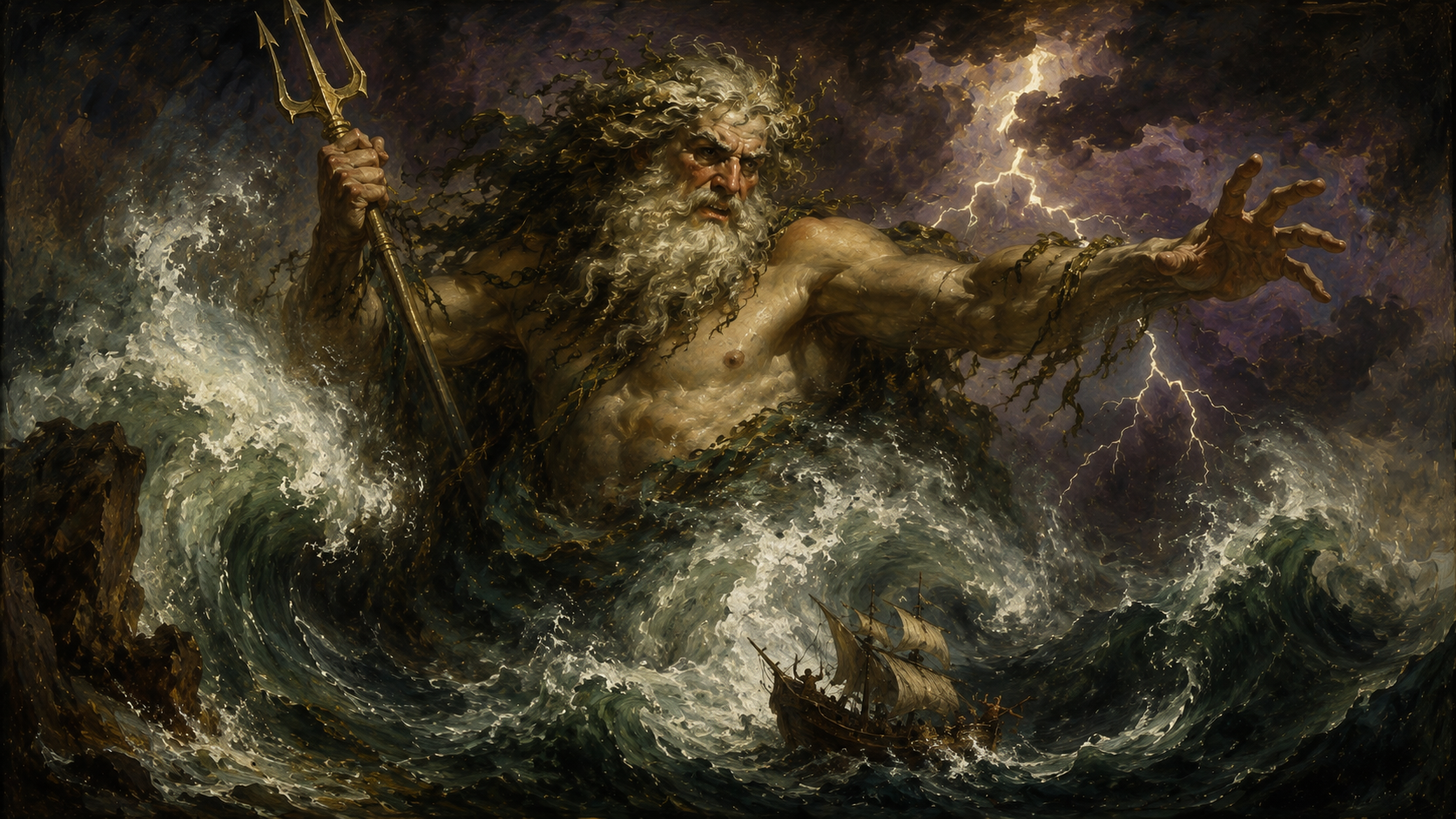
God of the sea and Odysseus's biggest problem. Odysseus blinded Poseidon's son Polyphemus, and
Poseidon never forgives it. He spends the entire poem hitting Odysseus with storms and shipwrecks,
which is the main reason the trip home takes ten years. Even other gods think his grudge is extreme.
Only a direct order from Zeus can get him to back off.
Appears in: Books 5, 8, 9, 11, 13
Gods & Immortals
Greek bust collection for your desk (10 figures) →
The Olympians and other immortals who keep meddling in mortal affairs.
Hermes
Messenger of the Gods
Zeus's delivery guy, basically. Hermes is the one who flies to Calypso's island and tells her
to let Odysseus go. He also slips Odysseus a magical herb called moly that blocks Circe's spells.
Quick, diplomatic, and comfortable everywhere, whether on Olympus or in the underworld.
Appears in: Books 5, 8, 10
Calypso
Nymph of Ogygia
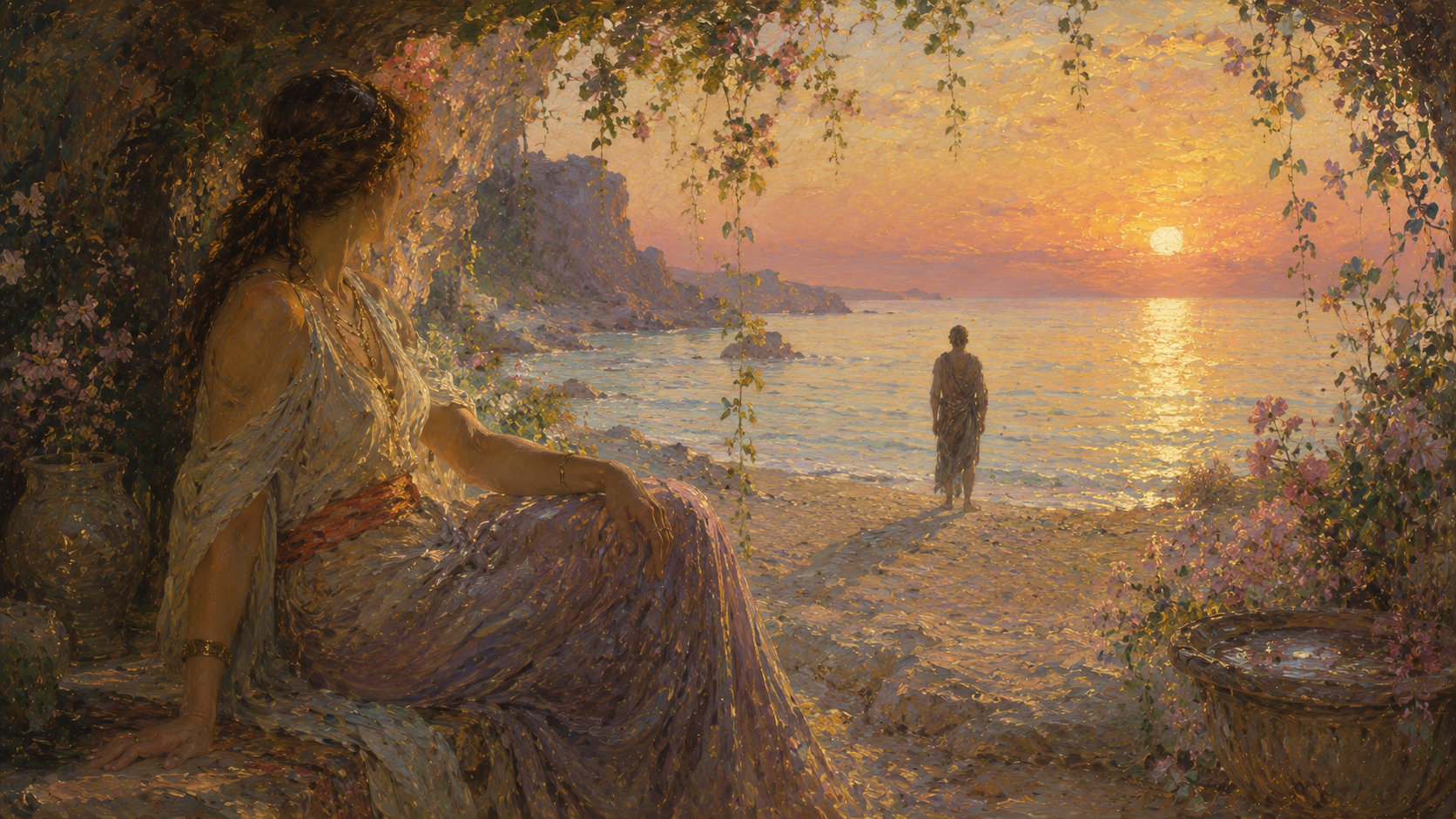
A nymph who keeps Odysseus on her island for seven years, offering him immortality if he will
stay. When Zeus orders her to let him go, she fires back with a sharp speech about the double
standard: male gods take mortal lovers all the time, but goddesses get punished for it.
She is captor and lover at the same time, and her island is a beautiful prison.
Appears in: Book 5
Circe
Enchantress of Aeaea
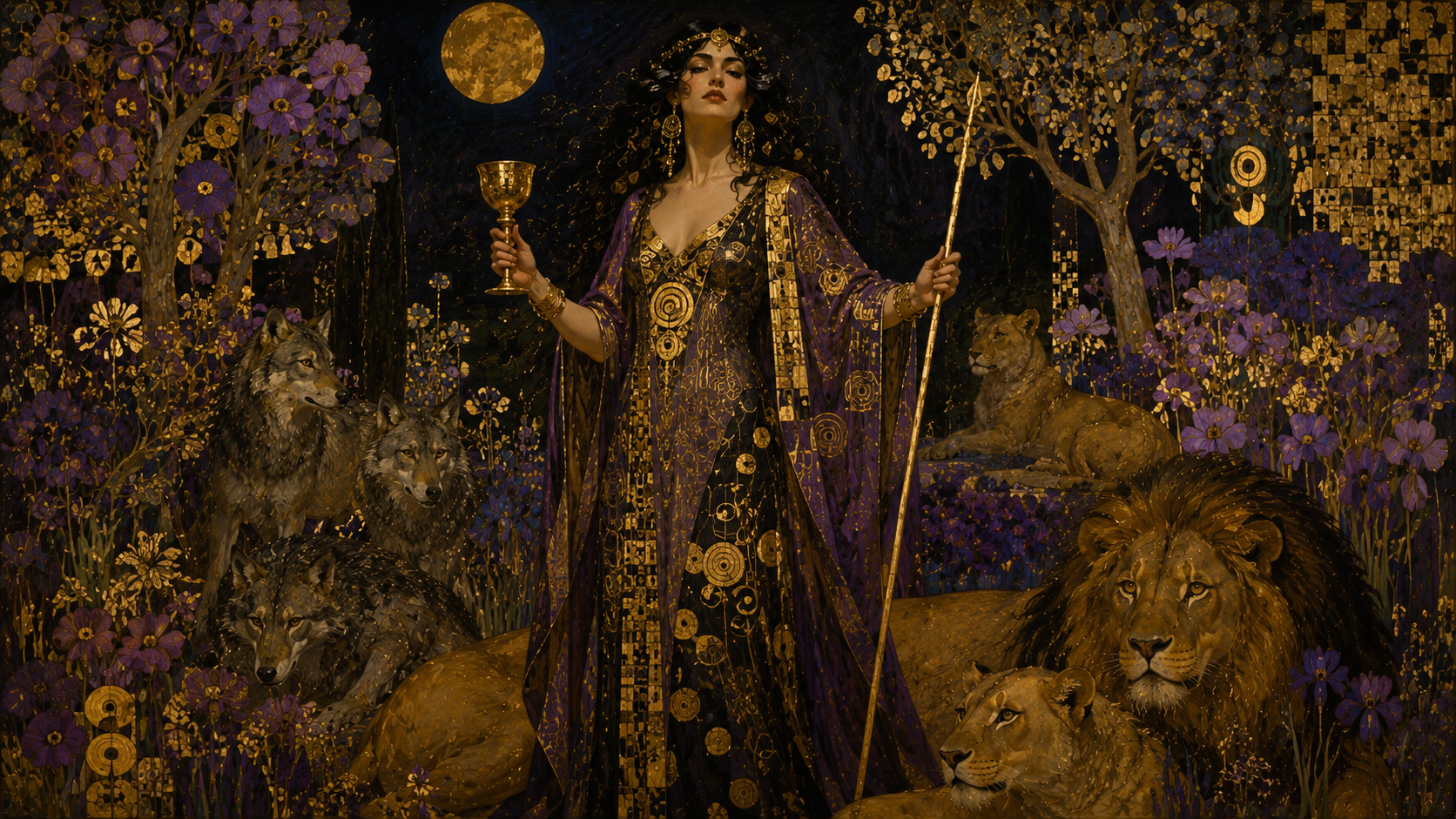
A witch-goddess who turns Odysseus's crew into pigs. When Odysseus resists her magic (thanks
to Hermes's herb), she becomes his host and lover for a full year. She is also the one who
tells him he needs to visit the land of the dead and warns him about the Sirens, Scylla and
Charybdis, and the Sun god's cattle.
Appears in: Books 10, 12
Hephaestus
God of the Forge
The smith god, featured in a song the bard Demodocus performs about Ares and Aphrodite's affair.
Hephaestus catches his wife and Ares in an unbreakable net, then calls the other gods over to
look. It is one of the funniest scenes in the poem, a comedy break right in the middle of the epic.
Appears in: Book 8
Ares
God of War
Trapped in Hephaestus's golden net next to Aphrodite while the other gods laugh at him. In the
Iliad he is terrifying; here he is the butt of the joke. His role in the Odyssey is purely comedic.
Appears in: Book 8
Aphrodite
Goddess of Love
She only shows up in Demodocus's song, caught alongside Ares in her husband's trap. The whole
episode is played for laughs at the Phaeacian court, a lighter moment tucked between heavier
stretches of the poem.
Appears in: Book 17
Apollo
God of Music & Light
Apollo does not say much directly in the Odyssey, but his presence is everywhere. He is mentioned
in Demodocus's songs, and his festival day on Ithaca happens to be the day Odysseus strings the
bow and kills the suitors. The timing is not a coincidence.
Appears in: Book 8
Helios
The Sun God
His sacred cattle graze on the island of Thrinacia, and Odysseus's crew kills them despite
being warned repeatedly not to. Helios goes straight to Zeus and threatens to take his sunlight
down to the underworld if the offense goes unpunished. Zeus sinks the ship. Only Odysseus survives.
Appears in: Book 12
Proteus
The Old Man of the Sea
A shape-shifting sea god that Menelaus ambushes on the island of Pharos. Proteus turns into a lion,
a snake, water, and a tree trying to escape, but Menelaus holds on. Once pinned down, Proteus
reveals what happened to the Greek heroes after Troy, including the news that Odysseus is alive
on Calypso's island.
Appears in: Book 4
Eidothea
Sea Nymph · Daughter of Proteus
Proteus's daughter, who feels sorry for Menelaus when he is stuck in Egypt and teaches him
exactly how to grab her father and hold on. Without her tip, Menelaus never learns the way home
and never finds out what happened to Odysseus.
Appears in: Book 4
Teiresias
The Blind Prophet of Thebes
The famous blind prophet, summoned from the dead in Book 11. Even as a ghost he can see the
future. He warns Odysseus to stay away from the Sun god's cattle, predicts the slaughter of the
suitors, and describes one last journey Odysseus must take after reclaiming Ithaca: carrying an
oar so far inland that people mistake it for a grain shovel.
Appears in: Book 11
Every character has their own voice in the full audiobook.
Listen Free
Mortals & Heroes
Kings, warriors, ghosts, and companions scattered across the world beyond Ithaca.
Nestor
King of Pylos
The oldest and wisest of the Greek commanders at Troy. When Telemachus shows up in Pylos asking
about his father, Nestor rolls out the hospitality and shares what he knows about what happened
to the other heroes. He talks a lot, sure, but everything he says matters and he treats his
guest exactly the way the poem says you should.
Appears in: Book 3
Menelaus
King of Sparta
Helen's husband and Agamemnon's brother, Menelaus was one of the last Greeks to make it home
from Troy. He hosts Telemachus in Sparta with spectacular generosity and tells him about his
own rough journey back, including the encounter with Proteus. His wealth and hospitality
show both the glory and the cost of the war.
Appears in: Books 4, 15, 17
Agamemnon
King of Mycenae · Ghost
Commander of the Greek forces at Troy, murdered by his own wife Clytemnestra and her lover
Aegisthus the moment he got home. His ghost shows up twice in the underworld, and his story
works as a dark mirror to Odysseus's: Agamemnon's wife killed him, while Penelope stayed faithful.
His fate hangs over the entire poem as a warning.
Appears in: Books 11, 24
Achilles
Greatest of the Greek Warriors · Ghost
The great hero of the Iliad shows up as a ghost in the underworld. He tells Odysseus he would
rather be a living farmhand working for a poor man than rule over all the dead. It is one of
the most famous lines in ancient literature, and it flips the Iliad's values upside down: being
alive matters more than glory.
Appears in: Books 11, 24
Alcinous
King of the Phaeacians
The Phaeacian king who takes in the shipwrecked Odysseus and treats him like royalty. Alcinous
throws feasts, organizes athletic games, and provides the audience for Odysseus's long narration
of his wanderings in Books 9 through 12. He also supplies the magic ship that finally gets
Odysseus home to Ithaca.
Appears in: Books 7, 8, 11, 13
Eumaeus
The Loyal Swineherd
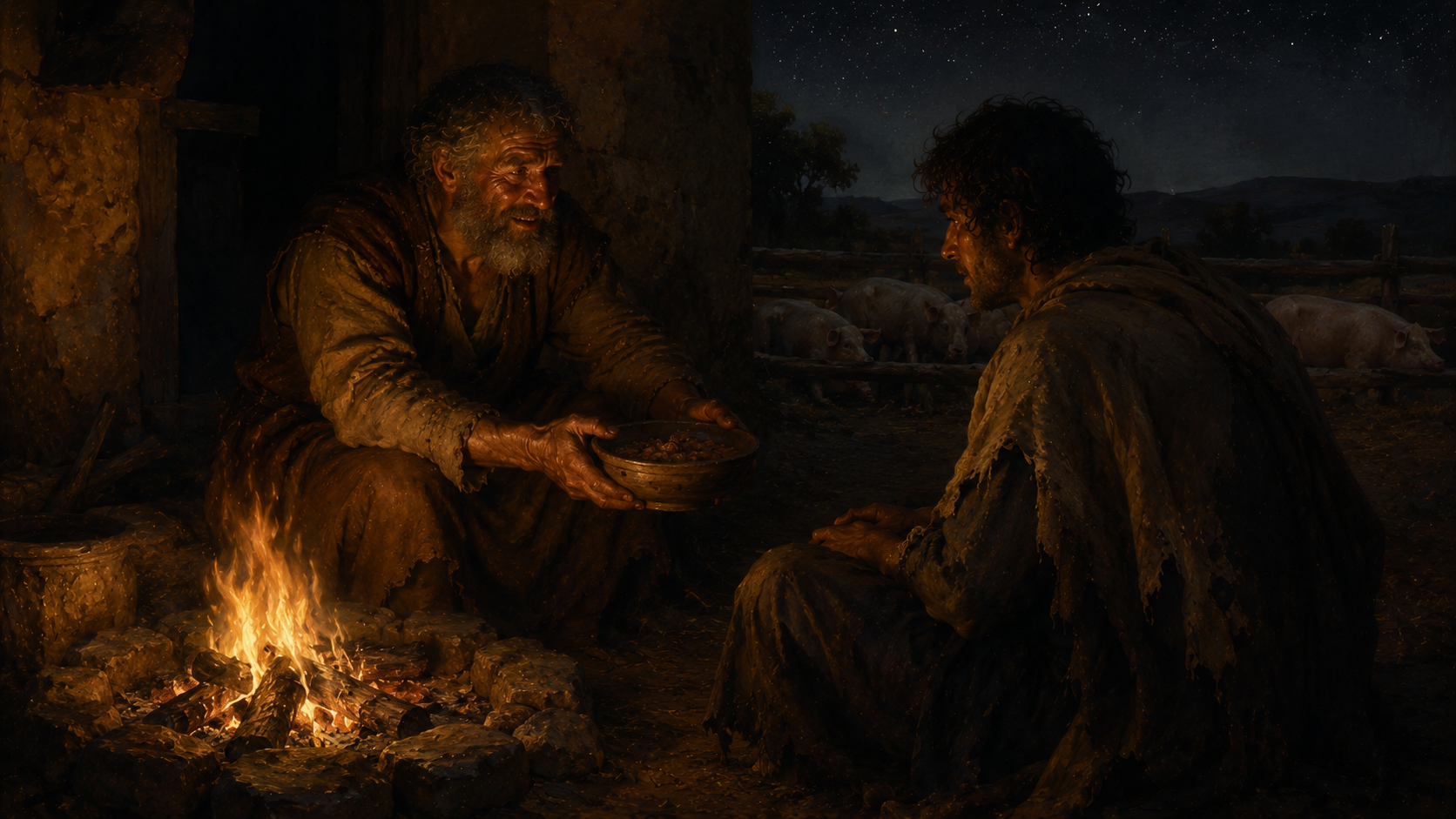
Odysseus's faithful swineherd, tending the pigs on Ithaca for twenty years while his master
is gone. When the disguised Odysseus shows up at his hut, Eumaeus feeds him and gives him a
place to sleep without knowing who he is. He helps plan the attack on the suitors and fights
in the final battle. Homer likes him so much that he addresses him directly in the second person,
something no other character gets.
Appears in: Books 14, 15, 16, 17, 20, 21, 22
Pisistratus
Son of Nestor
Nestor's youngest son, who rides along with Telemachus from Pylos to Sparta. He is polite,
thoughtful, and tears up when someone mentions his brother Antilochus, who died at Troy.
He makes a good travel companion and a natural peer for Telemachus during those early books.
Appears in: Books 3, 4, 15
Demodocus
Bard of the Phaeacians
The blind singer at Alcinous's court whose songs make Odysseus cry. He performs three songs:
the quarrel between Odysseus and Achilles, the comedy of Ares and Aphrodite, and the story of
the Trojan Horse. Ancient readers often thought Demodocus was Homer writing himself into the
poem, a blind bard who keeps the memory of heroes alive through song.
Appears in: Book 8
Laertes
Father of Odysseus
Odysseus's old father, who has basically given up on life. He quit the palace, stopped
taking care of himself, and spends his days working alone in his orchard. The reunion between
father and son in Book 24 is one of the poem's most emotional moments, and Laertes pulls himself
together to fight one last time when trouble comes.
Appears in: Book 24
Anticlea
Mother of Odysseus · Ghost
Odysseus's mother, who died of grief while he was gone. He finds her ghost in the underworld
and tries to hug her three times, but his arms pass right through. She is the one who tells him
what has been happening at home: Penelope is still waiting, and Laertes is wasting away with
sorrow. It is one of the saddest scenes in the poem.
Appears in: Book 11
Hercules
The Mighty Hero · Shade
Hercules's ghost shows up in the underworld looking terrifying, bow drawn, the dead shrieking
around him. Homer makes an interesting point here: the "real" Hercules is up on Olympus feasting
with the gods, while only his phantom lingers below. It is an early attempt to separate body
from soul.
Appears in: Book 11
Theoclymenus
The Wandering Prophet
A prophet on the run from Argos. Telemachus picks him up and brings him along. Theoclymenus
makes two big prophecies: he tells Penelope that Odysseus is already on Ithaca, and later he
has a horrifying vision of the suitors' hall dripping with blood and their souls heading to
the underworld. The suitors laugh him off.
Appears in: Books 15, 17, 20
Philoetius
The Loyal Cowherd
Another loyal servant, Philoetius tends the cattle on Ithaca. He openly tells the disguised
Odysseus how much he misses his real master. When the fight comes, he and Eumaeus help Odysseus
string the bow and bar the doors of the great hall so none of the suitors can escape.
Appears in: Book 20
Halitherses
Prophet of Ithaca
An old prophet on Ithaca who reads an eagle omen at the assembly in Book 2 and warns the
suitors that Odysseus is coming back. They laugh at him. In Book 24 he pops up again to
tell the Ithacans not to seek revenge for the dead suitors, helping the poem reach its ending.
Appears in: Books 2, 24
Mentor
Old Friend of Odysseus
An old Ithacan friend whom Odysseus left in charge of his household before sailing to Troy.
Athena borrows his appearance so often that his name literally became the English word "mentor."
When you see Mentor speaking in Book 2, you are never quite sure whether it is the man himself
or the goddess wearing his face.
Appears in: Book 2
Aegyptius
Elder of Ithaca
An old Ithacan lord who opens the assembly in Book 2 by pointing out that no one has called
a meeting since Odysseus left for Troy. His son Antiphus was one of the men the Cyclops ate,
which connects even this small character to the bigger story.
Appears in: Book 2
Autolycus
Grandfather of Odysseus
Odysseus's grandfather, a legendary thief and trickster. He is the one who named the baby
"Odysseus," which roughly means "child of pain." During a boar hunt at his estate, the young
Odysseus got the scar on his thigh that Eurycleia recognizes decades later. Odysseus comes by
his craftiness honestly; it runs in the family.
Appears in: Book 19
The Women of the Odyssey
Queens, servants, princesses, and enchantresses. They drive more of this story than you might expect.
Helen
Queen of Sparta
Back in Sparta after the war, living with Menelaus in a relationship that clearly has some
tension underneath the surface. When Telemachus visits, she slips a drug into the wine that
makes everyone stop feeling sad, then tells stories about Odysseus at Troy. She is sharp,
self-aware, and carrying the weight of knowing a war was fought because of her.
Appears in: Books 4, 15
Nausicaa
Phaeacian Princess
Alcinous's young daughter, who finds the shipwrecked, naked Odysseus on the beach. Her
handmaidens scream and run; Nausicaa stays put and helps him. She gives him directions to the
palace and practical advice on how to approach her parents. There is a quiet hint in the text
that she would not have minded marrying him.
Appears in: Books 6, 8
Arete
Queen of the Phaeacians
Queen of the Phaeacians and the person whose opinion actually matters in that court. Athena
tells Odysseus to go to Arete first when he enters the palace, because if she is on your side,
you are set. She is the one who notices Odysseus is wearing Phaeacian clothes and presses him
to explain where he really came from.
Appears in: Books 7, 8, 11
Eurycleia
Odysseus's Old Nurse
The old nurse who raised both Odysseus and Telemachus. She recognizes the disguised Odysseus
by the scar on his thigh while washing his feet, and the suspense of that scene is incredible.
She nearly blows his cover but manages to keep quiet under enormous pressure. After the battle,
she is the one who identifies which maids were disloyal.
Appears in: Books 2, 4, 17, 19, 20, 21, 22, 23
Eurynome
Penelope's Housekeeper
Penelope's trusted housekeeper and confidante. She looks after the queen, helps care for the
disguised Odysseus, and keeps the domestic side of the palace running despite the chaos the
suitors have brought. A steady, reliable presence in a household that badly needs one.
Appears in: Books 17, 18, 19
Melantho
The Treacherous Maid
A disloyal maid who has been sleeping with the suitor Eurymachus. She insults the disguised
Odysseus to his face twice, mocking him as a worthless beggar. She is a clear example of how
the suitors' influence has corrupted parts of the household. It does not end well for her.
Appears in: Books 18, 19
Antagonists & Suitors
The men eating Odysseus's food, chasing his wife, and scheming to kill his son.
Antinous
Leader of the Suitors
The worst of the suitors by a mile. Antinous throws a footstool at the disguised Odysseus,
plots to murder Telemachus, and leads the charge in draining the family's wealth. He is the
first to die when the slaughter begins, taking an arrow through the throat while lifting
a cup of wine. The poem treats him as pure arrogance in human form.
Appears in: Books 1, 2, 4, 16, 17, 18, 20, 21
Eurymachus
Second Suitor · The Smooth Talker
The second-biggest suitor, but sneakier than Antinous. Eurymachus says nice things to Penelope's
face while scheming behind her back. When the arrows start flying, he tries to talk his way out,
offering to pay Odysseus back for everything the suitors consumed. Odysseus says no. Eurymachus
is the second one killed, cut down as he reaches for his sword.
Appears in: Books 1, 2, 16, 18, 20, 21, 22
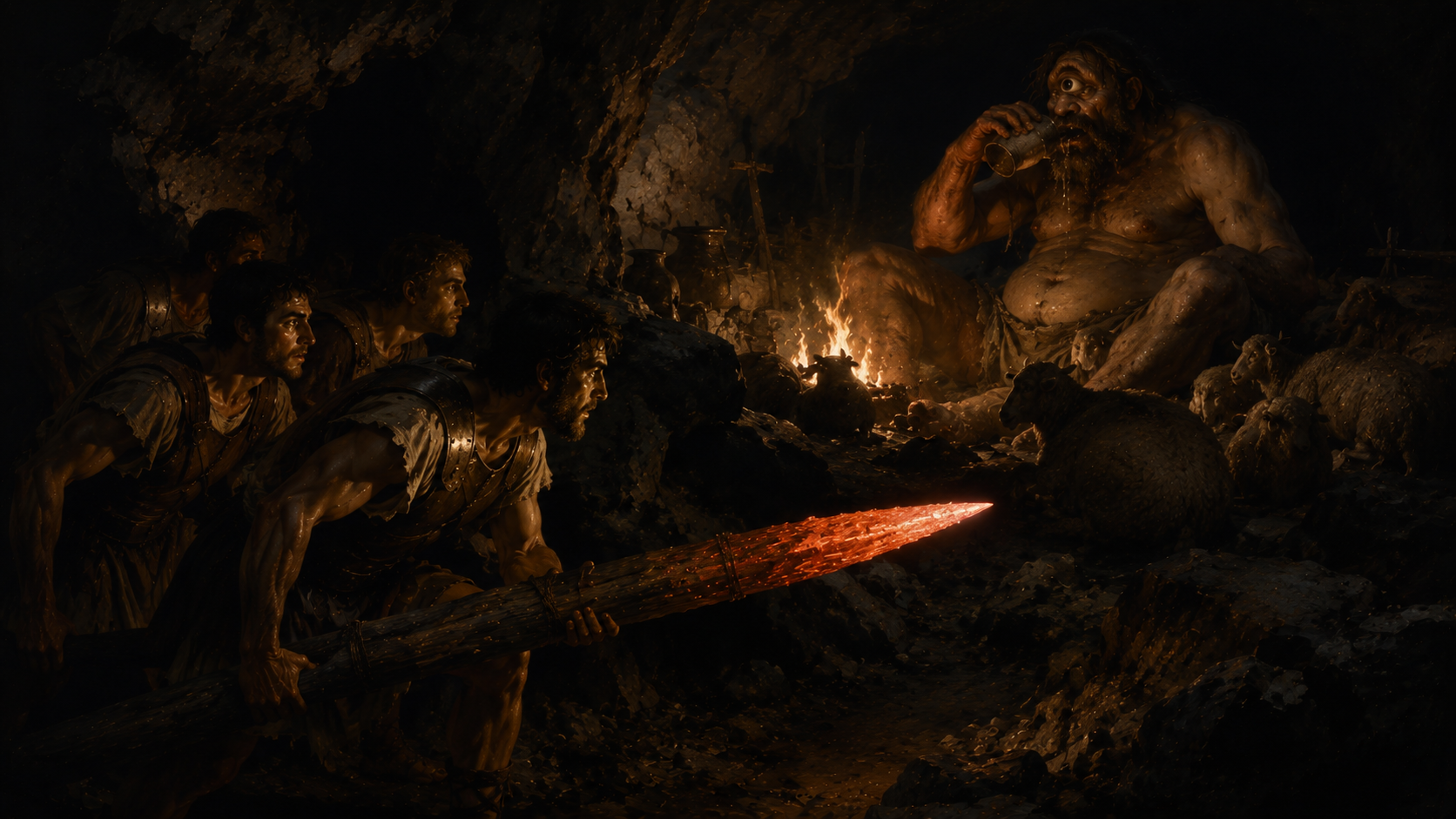
Polyphemus
The Cyclops
The one-eyed giant, son of Poseidon. He traps Odysseus and his men in a cave and eats six
of them. Odysseus gets him drunk, blinds him with a sharpened stake, and escapes by clinging
to the bellies of the giant's sheep. Then Odysseus makes a critical mistake: he shouts his real
name from the ship. Polyphemus prays to Poseidon for revenge, and that curse drives the rest
of the entire poem.
Appears in: Book 9
Amphinomus
The Kindest Suitor
The most decent of the suitors. He treats the disguised Odysseus with basic courtesy and even
brings him food. Odysseus quietly warns him to get out before the master of the house comes back,
but Amphinomus does not leave. He dies with the rest. He knew better but could not bring himself
to act on it, which makes him the most tragic figure among the suitors.
Appears in: Books 16, 18, 20
Agelaus
Bold Suitor
One of the bolder suitors, who tries to rally the others during the battle in the great hall.
He urges them to fight back rather than just stand there and die. It does not help. Bravery
without wisdom does not count for much in this poem.
Appears in: Books 20, 22
Leiodes
The Suitor-Seer
A soothsayer among the suitors, and the first one to try stringing Odysseus's bow. He fails.
During the slaughter he begs for mercy, claiming he never mistreated anyone. Odysseus kills
him anyway, reasoning that a prophet who hung around with the suitors must have prayed for
the master of the house to never come home.
Appears in: Books 21, 22
Euryalus
Phaeacian Nobleman
A young Phaeacian nobleman who insults Odysseus at the athletic games, calling him a merchant
rather than a real athlete. Odysseus responds by throwing a discus farther than anyone else,
then daring anyone to step up. Euryalus apologizes afterward and hands over a nice sword as
a peace offering.
Appears in: Book 8
Irus
The Beggar-Brawler
An actual beggar who tries to shoo the disguised Odysseus away from the palace doorstep, claiming
it as his territory. The suitors set up a boxing match between the two, and Odysseus flattens him
with one punch. His real name is Arnaeus; "Irus" is a joke nickname after the goddess Iris because
he runs errands for the suitors.
Appears in: Book 18
Melanthius
The Treacherous Goatherd
A disloyal goatherd who has thrown in with the suitors. He kicks and insults the disguised
Odysseus on the road to the palace, and during the battle he sneaks weapons from the storeroom
to the suitors' side. Eumaeus and Philoetius catch him, and the punishment that follows is
not pretty.
Appears in: Books 17, 20, 22
Eurylochus
Odysseus's Lieutenant
Odysseus's second-in-command, a cautious man whose caution sometimes tips into mutiny. He
refuses to enter Circe's hall, which is actually the smart move since everyone inside gets
turned into a pig. But later he talks the crew into eating the Sun god's forbidden cattle,
the one act that gets every man killed except Odysseus.
Appears in: Books 10, 12
Minor & Supporting Characters
Small roles, but Homer gives each of them a specific job in the story.
Medon
Palace Herald
The palace herald who secretly tips Penelope off about the suitors' plot to kill Telemachus.
When the slaughter starts he hides under an ox-hide and begs for his life. Telemachus speaks
up for him, and he is spared.
Appears in: Books 4, 17, 24
Phemius
The Ithacan Bard
The singer who has been performing for the suitors against his will. During the slaughter he
grabs Odysseus's knees and swears he only sang because they made him. Telemachus steps in to
save him. It is hard not to see Homer protecting a fellow poet here.
Appears in: Book 22
Laodamas
Phaeacian Prince
Alcinous's son and the best young boxer among the Phaeacians. He is the one who invites Odysseus
to compete in the games, which sets up the scene where Euryalus insults Odysseus and Odysseus
responds by out-throwing everyone.
Appears in: Book 8
Noemon
Ithacan Ship-Owner
The man who lends Telemachus the ship for his trip to Pylos and Sparta. He accidentally gives
away Telemachus's secret departure by innocently asking the suitors when the ship is coming back.
That tips the suitors off, and they set up an ambush for the return voyage.
Appears in: Book 4
Piraeus
Companion of Telemachus
A loyal friend of Telemachus who holds onto the gifts Menelaus gave them and stores
Theoclymenus's weapons. He keeps everything safe until Odysseus can reclaim the household
and there is somewhere secure to put it all.
Appears in: Books 15, 17
Polites
Odysseus's Loyal Crewman
Odysseus's most trusted crewman, who leads the scouting party to Circe's hall. He walks in
first and is the first one turned into a pig. When Odysseus hears what happened to Polites,
that is what drives him to go confront Circe alone.
Appears in: Book 10
Aeolus
King of the Winds
The keeper of the winds, who stuffs all the bad winds into a bag and gives it to Odysseus,
leaving just the gentle west wind to carry him home. They can actually see Ithaca when the crew
opens the bag out of curiosity. The released winds blow them all the way back to Aeolus, who
refuses to help again because clearly the gods have it in for this man.
Appears in: Book 10
Dolius
Laertes's Gardener
An old servant who works Laertes's farm alongside his sons. In Book 24, when the families of
the dead suitors come looking for a fight, Dolius and his sons grab weapons and stand with
Odysseus and Laertes. It is the poem's last act of loyalty.
Appears in: Book 24
Amphimedon
Suitor · Ghost
A dead suitor whose ghost tells Agamemnon's ghost the whole story of the bow contest and the
slaughter. When Agamemnon hears how faithful Penelope was, he contrasts her with his own wife
Clytemnestra, who murdered him. It neatly ties the two stories together.
Appears in: Book 24
Understanding the Cast of the Odyssey
The Odyssey has over sixty named speaking characters, which is enormous for an ancient poem. The story
moves from Olympus to the underworld, from a king's palace to a swineherd's hut. Every character,
even someone who only shows up for a few lines, connects to the poem's big themes: what war costs,
why homecoming matters, how you should treat guests, and how much control people actually have over
their own lives.
The Hierarchy of Characters
The cast breaks into natural layers. The gods sit at the top, with Athena and Poseidon pulling
Odysseus in opposite directions while Zeus makes the final calls. Below them are the mortal heroes:
Odysseus, Menelaus, Nestor, and the ghosts of Agamemnon and Achilles, whose different fates help
you understand what makes Odysseus's journey unique.
Then there is the domestic world of Ithaca: Penelope, Telemachus, Eurycleia, and the loyal servants
who have kept faith for twenty years. Finally come the antagonists, the suitors, the disloyal servants,
and the monsters. They represent the disorder that Odysseus has to cut through to reclaim his life.
Voice in the Odyssey
One thing that makes the Odyssey unusual is how much of it is people talking. Nearly two-thirds
of the poem is dialogue. Homer gives each speaker a recognizable style: Zeus sounds tired and
authoritative, Athena is sharp and tactical, Odysseus layers meaning under meaning, and Penelope
guards every word. Even the suitors sound different from each other. Antinous is blunt, Eurymachus
is slippery, and Amphinomus is uneasy.
Our reader gives each character a distinct voice so you can actually hear these differences. The gods
sound like gods, the hero sounds worn down, the suitors sound like men who do not realize what is
coming. It is the closest you can get to hearing the poem the way Homer's audiences did: not as one
voice reading aloud, but as a full drama with over sixty speakers.
Why the Characters Still Matter
Nearly three thousand years later, these characters still show up everywhere. Odysseus is the
template for every clever survivor in Western fiction. Penelope set the standard for intelligence
under pressure. Telemachus is the original coming-of-age hero trying to live up to a famous parent.
The suitors show what happens when entitlement goes unchecked, and the loyal servants prove that
heroism is not just for kings and gods.
When you read or listen to the Odyssey, you are not looking at a museum piece. You are meeting the
original cast that Western storytelling has been borrowing from ever since.
Explore Greek Mythology
Mythology (Edith Hamilton)The definitive guide to Greek, Roman, and Norse myths, illustrated 75th anniversary edition
Stephen Fry Greek Myths (4-Book Set)Mythos, Heroes, Troy, and Odyssey from the beloved storyteller
D'Aulaires' Book of Greek MythsThe beloved classic that's introduced millions of readers to Greek mythology since 1962
Greek Bust Statue Set (10 Pieces)Desktop collection of Greek gods and philosophers
Greek Mythology Poster Set (12 Prints)Gods and goddesses poster collection, 8x10 unframed prints
Greek Gods & Myths Art Prints8-piece mythology poster set featuring Aphrodite, Poseidon, Athena, and more
As an Amazon Associate, we earn from qualifying purchases.
COLLECT THE ART OF THE ODYSSEY
30+ original illustrations of scenes, characters, and moments from Homer's epic, ready to print or frame.
Art Collection: $3.99
Hear Them Speak
Every character on this page has a unique voice in our full-cast narration of The Odyssey. With 60+ distinct character voices, synchronized text, and all 24 books, hear Homer's epic the way it was meant to be experienced.
Start Listening Free